


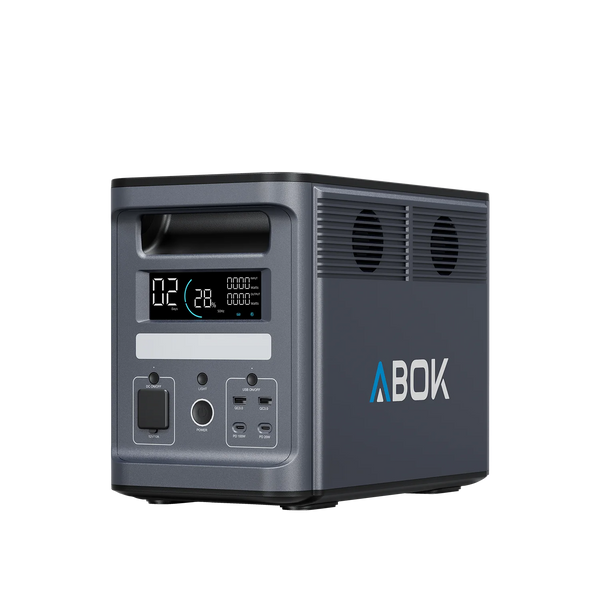

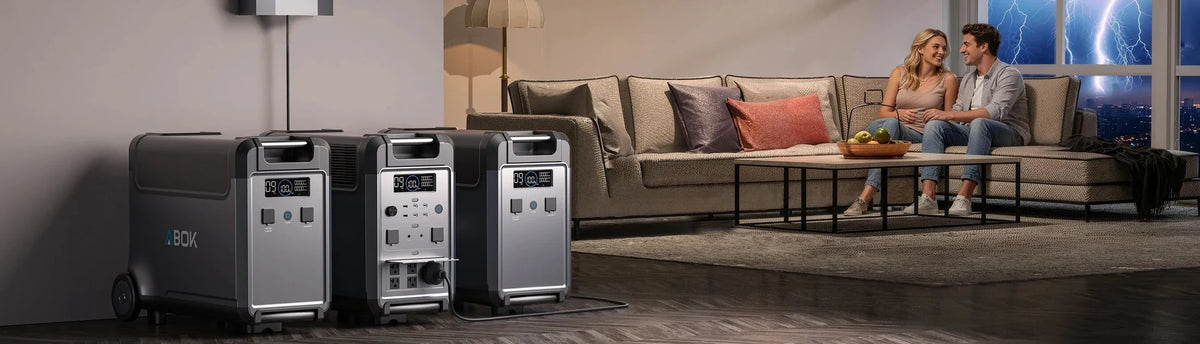

To understand how to size a generator, think in three steps: what must run, what must start, and what must last. Running watts tell you the amount of power your devices need after they are on. Starting watts, or surge watts, cover the brief jump required by refrigerators, sump pumps, air conditioners, and power tools. If you are choosing a solar generator or portable power station, watt hours also matter because they estimate runtime. A good generator is not sized for your whole wish list. It is sized for the loads you truly need during a power outage.
Start With the Outage You Are Planning For
Generator sizing gets easier when you stop asking, “What size generator do I need for my house?” and ask a sharper question: “What needs to keep working when the grid is down?”
A short summer outage, a winter storm, an RV trip, and a full home backup plan all create different power requirements. The same generator capacity will feel generous in one situation and too small in another.
| Outage plan | Likely loads | Main sizing issue |
|---|---|---|
| Communication only | Phones, router, laptop, LED lights | Low running watts |
| Food protection | Refrigerator, freezer, router, lights | Compressor startup surge |
| Basement protection | Sump pump, lights, Wi-Fi, freezer | Pump starting watts |
| Comfort backup | Essentials plus fan, microwave, TV | Load timing and outlet planning |
| Larger home backup | Furnace blower, pumps, selected circuits | Voltage and electrical systems |
| Whole house generator sizing | HVAC, kitchen, laundry, pumps, major circuits | Professional load planning |
This is where many buyers overspend or undersize. They either try to power everything, or they forget one appliance that matters. A better plan is to build a short list of loads that protect food, communication, comfort, health, and property.

Use the Run, Start, Last Method
A generator has three jobs. It needs to run your steady loads, start your hardest motor load, and last long enough to be useful.
That gives you a simple decision framework:
| Question | What to check | Why it matters |
|---|---|---|
| What must run? | Running watts | Sets the continuous power rating |
| What must start? | Starting watts or surge watts | Sets the peak power rating |
| What must last? | Fuel supply or battery capacity | Sets realistic runtime |
The U.S. Energy Information Administration explains that watts measure power, while watt-hours measure energy used over time. In plain terms, watts show demand at a moment, and watt-hours show energy across time.
That difference matters. A fuel generator is mainly sized by watts and fuel availability. A solar generator is sized by watts, surge output, and watt hours.
Calculate Running Watts First
Running watts are the continuous watts an appliance uses during normal operation. Lights, routers, laptops, TVs, and phone chargers usually have modest, steady power consumption.
Start your generator load calculation with a list like this:
| Load | Keep during outage? | Running watts |
|---|---|---|
| Refrigerator | Yes | Check label/manual |
| Freezer | Maybe | Check label/manual |
| Wi-Fi router and modem | Yes | Check power adapter |
| LED lights | Yes | Add only the bulbs in use |
| Sump pump | If needed | Check pump plate/manual |
| Furnace blower | If needed | Check HVAC documentation |
| Microwave | Brief use only | Check input watts |
| Power tools | Maybe | Check tool label/manual |
Do not include appliances just because you own them. A generator does not care what is plugged in around the house. It only cares what is running at the same time.
If a label lists volts and amps but not watts, use this formula:
Watts = Volts x Amps
That estimate usually helps with running watts. It may not show the extra wattage required to start and run motor-driven equipment.
Add the Largest Startup Surge
Starting watts are the short burst of power some devices need when they turn on. This is why a refrigerator generator size cannot be based only on the running load. The compressor may need a higher surge for a moment before settling down.
The same issue applies to sump pump generator size, air conditioning, furnace blowers, freezers, and many power tools.
Use this formula:
Minimum generator output = total running watts + largest extra startup surge
The largest extra startup surge is:
Starting watts - running watts
Here is a sample worksheet. Use your real appliance data before buying.
| Load | Running watts | Starting watts | Extra surge |
|---|---|---|---|
| Refrigerator | 500W | 1,500W | 1,000W |
| Sump pump | 800W | 2,200W | 1,400W |
| Router and modem | 25W | 25W | 0W |
| LED lights | 80W | 80W | 0W |
| Laptop charging | 100W | 100W | 0W |
| TV | 150W | 150W |
0W |
Total running watts:
500 + 800 + 25 + 80 + 100 + 150 = 1,655W
Largest extra startup surge:
2,200 - 800 = 1,400W
Minimum demand:
1,655 + 1,400 = 3,055W
For this load list, you would want a generator with continuous output above 1,655 watts and surge output above 3,055 watts. Extra headroom is useful because appliances cycle, labels are not always exact, and people often add one more device during an outage.
Use a Generator Size Calculator Carefully
A generator size calculator or generator wattage calculator can help organize your numbers. It should not make the decision for you.
The calculator does not know whether your refrigerator is new or old, whether your sump pump is 120V or 240V, whether your air conditioner has a soft-start device, or whether you plan to run the microwave while the pump is starting.
Use calculators this way:
| Calculator input | Better habit |
|---|---|
| Appliance type | Replace generic numbers with your actual label or manual rating |
| Running watts | Confirm the continuous load |
| Starting watts | Check motors, pumps, compressors, and power tools |
| Runtime | Separate fuel runtime from battery runtime |
| Generator capacity | Compare both continuous and surge power rating |
An appliance wattage chart is useful for early planning. Your final number should come from the equipment in your home.
Match the Generator Type to the Job
Different types of generators solve different problems. Choosing the wrong type can be just as frustrating as choosing the wrong size.
| Generator type | Good fit | Key checks |
|---|---|---|
| Portable generator | Outdoor emergency generator for house loads, job sites, temporary backup | Fuel types, noise, carbon monoxide safety, outlet rating |
| Inverter generator | Camping, RV use, sensitive electronics, smaller home loads | Clean output, fuel runtime, starting watts |
| Solar generator | Indoor battery backup, quiet operation, portable power station sizing | AC output, surge rating, battery capacity |
| Standby generator | Automatic home backup generator sizing |
Transfer switch, fuel supply, code-compliant installation |
Portable generator sizing often focuses on fuel, wattage required, and safe placement. Inverter generators are often chosen for sensitive electronics because they are designed to deliver steadier power than many conventional open-frame units.
Solar generator sizing is different. You still need enough output power to run the appliance, but you also need enough battery capacity to keep it running.
Size a Solar Generator by Output and Runtime
A solar generator or portable power station must pass two tests.
First, the power rating must be high enough. The continuous AC output should cover your running watts, and the surge rating should cover the hardest startup load.
Second, the battery capacity must be large enough. Capacity is measured in watt hours.
Use this formula:
Battery capacity needed = load in watts x runtime in hours
For example, a 250W load running for six hours needs about 1,500Wh before real-world losses. Actual runtime may be lower because of inverter loss, standby draw, temperature, battery reserve, and appliance cycling.
This is why portable power station sizing should never rely on only one number. A unit with high output but limited watt hours may start a load but run it briefly. A unit with a large battery but a smaller inverter may have long storage capacity but still fail to start a high-surge appliance.
ABOK’s related generator sizing guide includes additional planning context for backup power for home use and portable power stations.

Check Voltage Before You Choose a Generator
Wattage is not the whole decision. Voltage and outlets can decide whether a generator actually works with your electrical systems.
Many small generators provide 120V only. Some larger loads may need 240V. That can include certain well pumps, central air conditioning equipment, dryers, ranges, and transfer-panel setups.
Before buying, check:
| Item | Why it matters |
|---|---|
| 120V or 240V output | The generator must match the load |
| Outlet type | Plugs, cords, and transfer equipment must be compatible |
| Continuous power rating | Must cover the normal running load |
| Surge power rating | Must cover the hardest startup moment |
| Fuel type | Affects runtime, storage, maintenance, and output |
| Battery capacity | Critical for solar generators and battery power solutions |
This is also where whole house generator sizing becomes more complex. Once you want to power hardwired circuits, HVAC, pumps, or automatic systems, a qualified electrician should review the setup.
Plan for Safety, Not Just Power
A generator that is large enough can still be unsafe if it is installed or operated incorrectly.
OSHA warns that portable generators should not be connected directly to a building’s electrical system unless a proper transfer switch is installed. Backfeeding through a wall outlet can energize utility lines and create serious danger.
Fuel-burning generators also create carbon monoxide. The Consumer Product Safety Commission says portable generators should be used outside only, at least 20 feet away from the home, with exhaust directed away.
Do not run a fuel generator in a garage, basement, shed, porch, crawlspace, or near open doors and windows. Install working carbon monoxide alarms on every level of the home and outside sleeping areas.
Battery-based power solutions do not create engine exhaust during use, but they still require correct charging, dry placement, temperature control, and operation within the manufacturer’s ratings.
When a Smaller Generator Makes More Sense
A larger generator can feel reassuring, but it is not always the smarter choice. It may use more fuel, cost more, make more noise, and be harder to move.
A smaller generator may work well if you manage loads intentionally.
| Load decision | How it reduces required generator capacity |
|---|---|
| Run the microwave only when the pump is off | Avoids stacking high loads |
| Use LED lights instead of large lighting loads | Lowers running watts |
| Skip electric space heaters | Avoids a major continuous load |
| Let the refrigerator cycle without extra heavy loads | Protects surge capacity |
| Charge devices in batches | Reduces clutter and power draw |
| Use fans instead of large air conditioners when possible | Cuts startup and running demand |
This kind of planning often gives better peace of mind than buying more generator than you can comfortably store, fuel, or operate.

When You Need a Larger System
Some loads change the entire sizing conversation. Central air conditioning, electric heat, well pumps, electric water heaters, electric ranges, dryers, and large workshop tools can require much more power than basic outage essentials.
A larger or professionally planned system may be appropriate if you need:
| Need | Why it matters |
|---|---|
| Central air conditioning | High starting watts and possible 240V demand |
| Well pump backup | Startup surge and water pressure needs |
| Medical equipment | Reliability and runtime are critical |
| Hardwired circuit backup | Requires approved transfer equipment |
| Automatic operation | Loads may start without manual control |
| Whole-home comfort | More simultaneous power consumption |
For permanent home backup generator sizing, a professional can check load management, fuel supply, local code, transfer equipment, and whether certain devices should be staged instead of started together.
Common Generator Sizing Mistakes
Sizing by Square Footage
Square footage does not reveal appliance load. A small home with a well pump and electric heat can need more power than a larger home with gas heat and fewer electric appliances.
Trusting Peak Watts as the Main Rating
Peak watts are temporary. Your normal loads must fit under the continuous power rating. Surge capacity is there for startup demand, not full-time operation.
Forgetting the Hardest Startup Moment
Refrigerators, sump pumps, air conditioners, and power tools may draw much more power for a short moment. If your generator cannot handle that moment, it may overload even if the running watts look fine.
Ignoring Fuel Types
Gasoline, propane, natural gas, and battery power all change runtime, storage, maintenance, and convenience. Some dual-fuel or tri-fuel generators also have different output ratings depending on the fuel.
Confusing Watts With Watt Hours
Watts answer, “Can it run this?” Watt hours answer, “How long can it run this?” Solar generators and portable power stations need both numbers.
Buying Before Checking the Plug
The generator may have enough power on paper but lack the correct outlet, voltage, or connection method. Confirm the physical setup before you buy.
Frequently Asked Questions
How do I calculate generator size?
Add the running watts of everything you want to run at the same time. Then add the largest extra startup surge from one motor-driven load. Choose a generator with continuous and surge ratings above those numbers.
What size generator do I need for a refrigerator?
Check the refrigerator label or manual for running watts and starting watts. Then add the other loads that will run at the same time. Refrigerator generator size depends heavily on compressor startup, not just normal running power.
What size generator do I need for a sump pump?
Use the pump plate or manual to confirm running watts, starting watts, and voltage. Sump pump generator size can be surprisingly high because pump motors often need a strong startup surge.
Is a 7,500-watt generator enough for a house?
It can be enough for many managed essential-load plans. It may not be enough for central air conditioning, electric heat, electric cooking, a well pump, or whole-home backup. The load list decides.
How many watt hours do I need for a solar generator?
Multiply the load in watts by the runtime you want in hours. A 200W load for five hours needs about 1,000Wh before losses and reserve capacity. For important backup loads, leave extra margin.
Final Takeaway
Generator sizing is not a guessing game. List what must run, identify what must start, and decide what must last. Add running watts, include the largest startup surge, then check voltage, outlets, fuel types, safety requirements, and battery capacity if you are comparing solar generators. That process gives you a generator sized for real backup needs, not a rough label or a crowded appliance wish list.
Aktie:
What Size Generator for a 30 Amp RV? Wattage Guide | ABOK
How Do You Hook Up a Generator to the House Safely?