



How Many Watts to Run a House?
A generator for a house usually needs about 3,000 to 7,500 watts for managed essential loads, 7,500 to 12,000 watts for broader backup, and 12,000 to 25,000 watts or more for near whole-home coverage. The right size depends on the household appliances you want to run at the same time, their starting watts, and whether you need 120V or 240V power.
Fuel generators are limited by wattage, fuel, and safe connection. Solar generators and portable power stations also require watt-hour, battery capacity, and solar input planning.
Quick Generator Size for House Backup

Backup goalPlanning wattageTypical loadsMinimal essentials1,500-3,000WLED lights, router, phones, laptops, small electronicsManaged essentials3,000-5,000WRefrigerator, freezer, lights, Wi-Fi, TV, chargersBroader backup5,000-7,500WEssentials plus furnace blower, sump pump, coffee makers, or microwaveLarger home backup7,500-12,000WMore circuits, selected HVAC systems, washing machines, pumps, and kitchen loadsWhole-home style backup12,000-25,000W+Larger HVAC, water heating, cooking, laundry, and other high-load appliances
Your final home backup generator size should come from your actual load list. Larger homes do not always need larger generators, and smaller homes may need more power if they rely on central air conditioning, an electric water heater, a well pump, or electric heat.
Your Electricity Bill Does Not Tell the Whole Story
Your electricity bill shows energy use over time, usually in kilowatt-hours. A generator must handle power required at one moment, usually measured in watts or kilowatts.
The U.S. Energy Information Administration reported that average monthly electricity consumption per U.S. residential customer was 865 kWh in 2024. That helps explain long term energy use, but it does not answer how many watts to run a house during power outages.
A refrigerator cycles on and off. A sump pump may start suddenly. Coffee makers, power tools, microwaves, and washing machines may draw large amounts of power for short periods. That is why generator size for house backup should be based on appliance wattage, not only your electricity bill.
Watts, Watt-Hours, and Runtime

Watts measure power. They show whether a generator can start and run a load. Watt-hours measure stored energy. They help estimate runtime for battery-based backup solutions. The EIA explains these electricity measurements in more detail.
A basic runtime estimate is:
Estimated runtime = usable battery capacity in Wh ÷ average load in W
This is only a planning estimate. Real runtime changes with appliance cycling, temperature, inverter losses, standby draw, and the number of devices running at once.
Running Watts vs Starting Watts
Running watts vs starting watts is one of the most important generator sizing concepts. Running watts are the power an appliance uses after it is operating normally. Starting watts, also called surge watts, are the extra power some equipment needs to start and run.
This matters for refrigerators, freezers, sump pumps, well pumps, furnace blowers, central air conditioning, washing machines, compressors, and power tools. The American Red Cross recommends adding up the appliances and devices you want to use, then choosing a generator with more capacity because some machines draw more power during startup.
Use this simple formula:
Estimated peak requirement = total simultaneous running watts + largest additional starting surge
If you can stagger motor-driven appliances, the watts needed to power a house may be lower.
Simple Generator Wattage Calculator Method

You can use a generator wattage calculator, but a simple worksheet is often more accurate.
- List the household appliances you need during an outage.
- Find each appliance’s running watts from the label, manual, or manufacturer website.
- Mark appliances with starting watts or surge demand.
- Add the running watts for everything that may run at the same time.
- Add the largest starting surge.
- Choose equipment with enough continuous output and surge capacity.
- Check voltage, outlet type, extension cords, transfer equipment, and safety rules.
For battery backup, also estimate how many hours each load must run, especially during long term outages or weather events that may reduce solar charging.
Example Essential-Load Plan
The wattages below are examples only. Replace them with your actual appliance data.
Appliance or loadExample running wattsPlanning noteLED lights100WEasy to supportWi-Fi router20WUsually low drawRefrigerator700WCheck startup surgeFreezer500WCheck startup surgeFurnace blower600WImportant in winterSump pump800WHigh priority if flooding is possibleCoffee maker1,000WUse separately when possibleMicrowave1,000WShort-use loadWashing machine500-1,500WVaries by cycleElectric water heater4,500W+Often excluded from small backup plansCentral air conditioningVaries widelyRequires careful sizing
If your simultaneous running load is 2,700W and the largest additional startup surge is 1,500W, your estimated peak requirement is about 4,200W. In that case, a 5,000W unit may be close, while a larger system gives more headroom.
Can a 5000 Watt Generator Run a House?
A 5000 watt generator can run selected essentials in many homes, but it is usually not a whole house generator. It may support LED lights, a refrigerator, freezer, Wi-Fi, phone charging, and one managed appliance. It may struggle if a sump pump, well pump, microwave, washing machine, or furnace blower starts at the same time.
Can a 7500 Watt Generator Run a House?
A 7500 watt generator can run a house with broader essential backup if loads are managed. It may handle refrigeration, lights, internet, a furnace blower, sump pump, and selected kitchen appliances with more headroom than a smaller generator.
Still, 7,500W does not mean everything can run normally. Central air conditioning, electric heat, electric water heaters, electric ranges, dryers, and large power tools can quickly exceed available capacity.
Whole House Generator Watts vs Essential Backup Watts
Whole house generator watts are different from essential backup watts. Essential backup focuses on food storage, lighting, communication, heat controls, pumps, and necessary devices. Whole-home backup tries to keep most normal circuits available.
Before choosing whole-home backup, decide whether you truly need HVAC systems, electric heat, an electric water heater, laundry, cooking, well pumps, sump pumps, EV charging, or medical equipment. If yes, professional sizing is the safer path.
Can a Solar Generator Run a House?
A solar generator can run part of a house if its output, surge rating, battery capacity, ports, and solar input match the loads. It should not be assumed to run an entire home just because it is called a solar generator.
For solar generator sizing, check output watts, battery capacity, surge rating, solar input, outlet type, and whether the system supports the voltage your appliances need. Many modern portable power stations use LiFePO4 batteries, but battery chemistry, cycle life, ports, and expansion options vary by model.
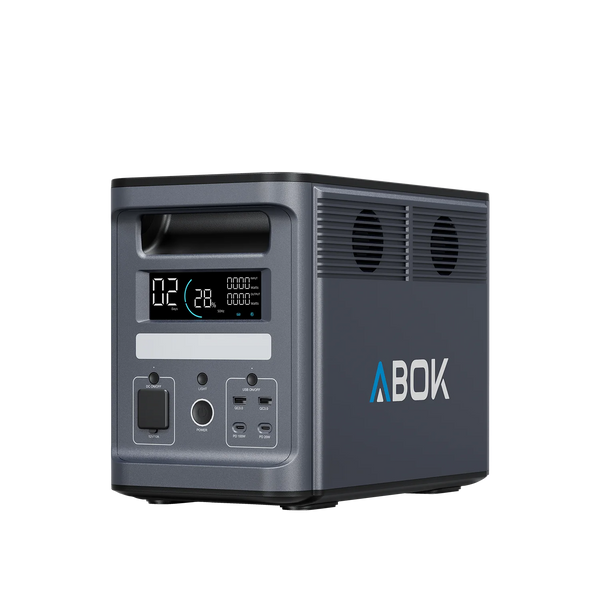
If you are comparing a portable power station for home backup, start with the ABOK Home Backup Power Stations collection. ABOK lists the Ark3600 with 3,600W AC output, 3,840Wh battery capacity, and up to 2,000W solar input. ABOK lists the Ark7200 with 9,792Wh capacity, 7,200W dual-phase AC output, and up to 2,500W solar input. Confirm current specifications, accessories, voltage support, and compatibility on the official product pages before purchase.
Safety Rules for Fuel Generators

Fuel generators must be used outdoors because exhaust contains carbon monoxide. The U.S. Consumer Product Safety Commission warns never to use portable generators inside homes, garages, basements, crawlspaces, sheds, or near windows and vents. NIST advises placing generators at least 25 feet from the home with exhaust pointed away from openings.
Never plug a generator into a wall outlet to power house wiring. This can cause backfeeding. If you want to connect backup power to home circuits, use an approved transfer switch installed by a qualified electrician.
Frequently Asked Questions
How many watts to run a house during an outage?
Many essential-load plans need 3,000 to 7,500 watts. Broader backup may need 7,500 to 12,000 watts. Whole-home backup can require 12,000 to 25,000 watts or more.
What size generator do I need for my house?
List your essential appliances, add their running watts, and include the largest starting surge. Do not size only by square footage or your electricity bill.
Can a solar generator run a house long term?
It can run selected loads if output, battery capacity, and solar input are sufficient. For long term outages, calculate both watts and watt-hours.
Do I need a transfer switch?
You need approved transfer equipment if backup power connects to home wiring. Ask a qualified electrician before connecting any generator or large power system to household circuits.
Bottom Line
The safest answer to “how many watt generator to run a house” is to calculate your real outage loads. Add simultaneous running watts, include starting watts, check 120V or 240V requirements, and leave enough headroom.
For essential backup, many homes can start planning around 3,000 to 7,500 watts. For broader backup, 7,500 to 12,000 watts may be more realistic. For whole-home backup, especially with central air conditioning, electric water heating, larger homes, or high power required, get professional sizing before buying.
Aktie:
Generator Size for House Backup
How Big of a Generator to Run a House?